

The creator economy has a transparency problem. Everyone talks about six-figure deals and passive income, but the full picture is…

Not $500,000. Not $100,000. Fifty thousand dollars is roughly the US median household income, and 88% of full-time creators can’t reliably hit it. This is from a 2023 Linktree report covering hundreds of thousands of creators globally.


Only 12% of full-time creators earn more than $50,000 a year.
Not $500,000. Not $100,000. Fifty thousand dollars is roughly the US median household income, and 88% of full-time creators can’t reliably hit it. This is from a 2023 Linktree report covering hundreds of thousands of creators globally.
The same economy that produced YouTube millionaires and Substack empires leaves the overwhelming majority of creators patching together brand deal crumbs, inconsistent affiliate commissions, and launch-dependent course revenue. Not because they aren’t talented. Not because their audiences aren’t real. But because the monetization models available to them were built for someone else, typically for the top 1% of creators with audience sizes that most people will never reach.
Meanwhile, the US recruitment market processes $200 billion in spending every year. Companies are not hoarding that money. They are actively spending it on job boards, on agencies, on LinkedIn ads, and on sourcing tools, trying to find people that, in many cases, already exist inside a creator’s audience.
That gap, between what creators have and what the hiring industry desperately needs, is where creator-led hiring was born.
This guide covers everything: what it actually is, how the money works, what it is not, and why it sits differently from every other monetization model the creator economy has produced.
The advertising industry had its reckoning with creator trust around 2016. It took years of skepticism, dismissed case studies, and stubborn brands refusing to believe that a YouTube channel with 80,000 subscribers could outperform a national TV spot and then the data came in and the industry pivoted hard.
Influencer marketing is now a $24 billion global industry. The underlying insight that drove it: community beats reach. Trust converts. A warm recommendation from someone you follow beats a cold ad from a brand you’ve never heard of.
The recruitment industry has not had that reckoning yet.
The average corporate job posting receives 250 applications. Of those, hiring managers typically consider fewer than 10% seriously. Companies spend weeks filtering noise. Job seekers spend months applying in silence. The average time-to-hire in the US sits at 44 days, and the cost-per-hire across industries averages $4,700, and that’s before you factor in the cost of a bad hire, which the Department of Labor estimates at 30% of the employee’s first-year earnings.
The system is expensive, slow, and broken. And companies keep feeding it $200 billion a year because there wasn’t a better infrastructure.
Here is what the recruitment industry hasn’t seen yet: a niche creator who covers Fintech, SaaS sales, or product management has already done the hardest part of hiring. They’ve built a community of pre-qualified, niche-specific professionals who trust their recommendations deeply enough to act on them.
Creator-led hiring is the model that finally connects those two realities.
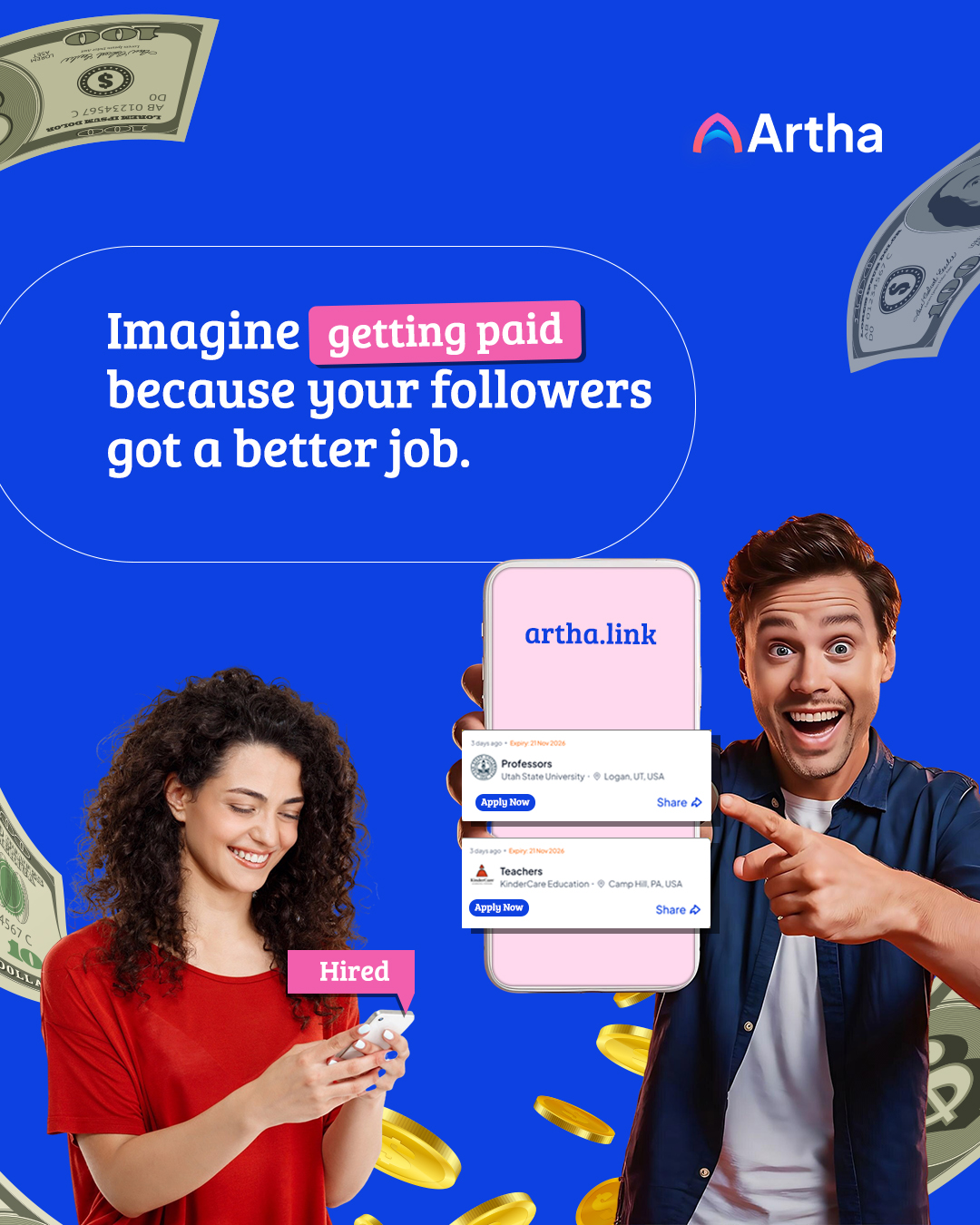
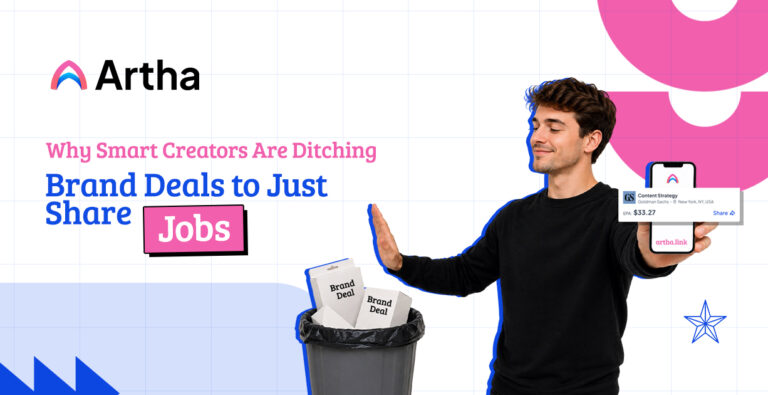
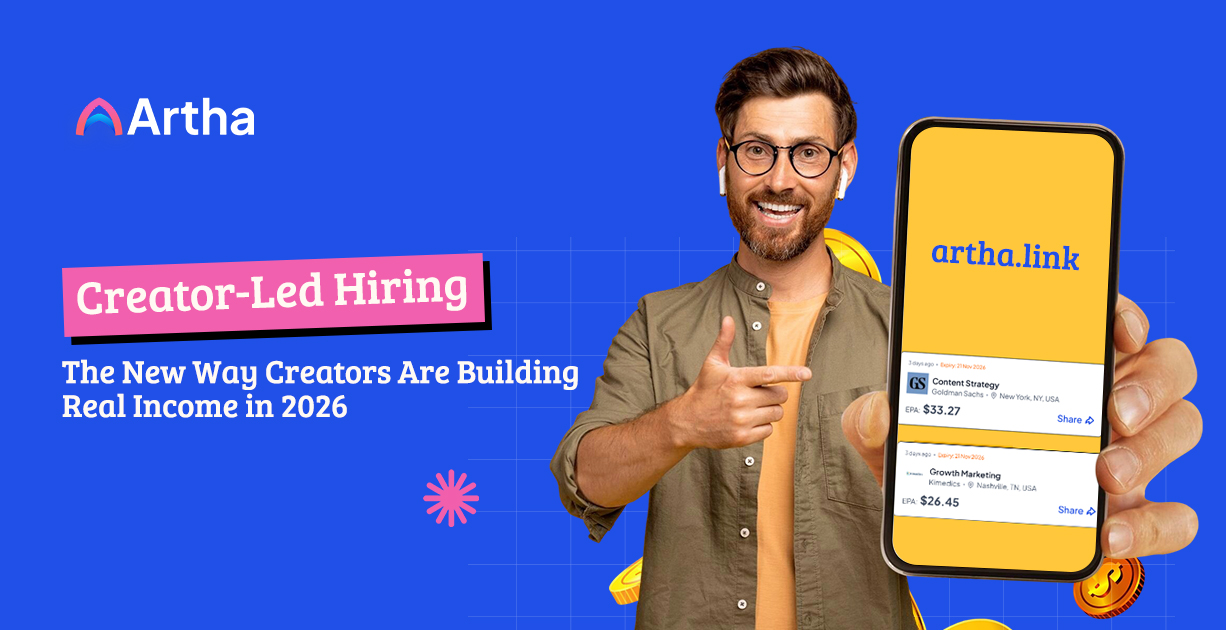
Creator-led hiring is a model where niche creators earn income by connecting their audience to relevant job opportunities through a curated job discovery page that lives at their own link.
Here’s how it works in practice: artha.link gives you a custom job page built around your niche preloaded with thousands of niche jobs. Your audience, the nurses, software engineers, truck drivers, hotel managers, or marketing professionals who already follow you, finds roles that match where they are in their careers. When someone clicks through to apply, you earn. Your audience pays nothing. You screen nobody. You manage nobody.
You share the link. The income follows.
A finance creator who has spent two years breaking down the job market to 40,000 followers has built something no job board has: a trusted relationship with a specific professional community. When that creator surfaces a role, it doesn’t land like noise. It lands like a recommendation from someone the audience already believes.
That gap between noise and trusted signal is what creator-led hiring is built on.
Every niche creator monetization model that came before creator-led hiring asks something of the audience.
None of these models are dishonest. But all of them carry an inherent conflict of interest. The creator earns when the audience spends, clicks, or converts. And audiences can feel that tension over time.
Creator-led hiring flips the equation entirely.
The audience doesn’t buy anything. They receive something valuable instead: curated job opportunities from someone they already trust and often DM for career help anyway.
The creator’s income grows as the audience is helped more. That is a structurally different relationship, and for professional-niche creators, it’s the most aligned monetization model that has ever existed.
Creator-led hiring is one of the few models where everyone genuinely benefits. Most monetization systems help one side at the expense of another. This one doesn’t.
Creators earn consistent income from the audience they’ve already built without chasing brand deals, creating new formats, or asking followers to spend money. Success depends on relevance, not vanity metrics. A creator with 8,000 engaged software engineers can outperform one with 80,000 passive followers because creator-led hiring rewards trust and niche authority.
Followers get curated job opportunities from someone whose judgment they already trust. Instead of throwing applications into generic job boards, they see roles actually relevant to their career stage and interests. They pay nothing. They lose nothing. They simply get value.
That’s why creator-led hiring doesn’t damage trust like sponsored posts often do.
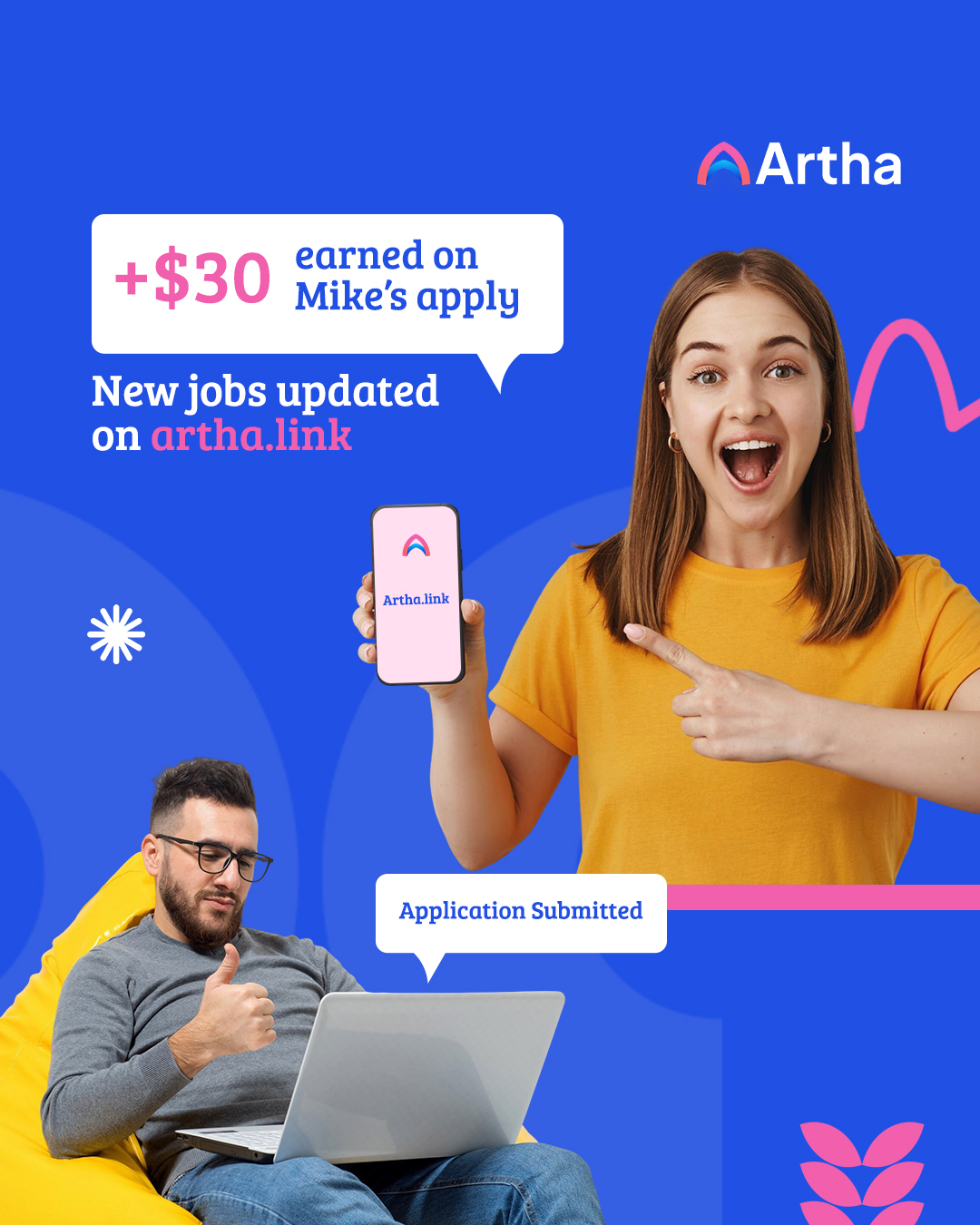
Creator-led hiring runs on two payment structures. Both are straightforward. Neither requires you to do anything beyond sharing your link.
Every time someone from your audience clicks a job link you shared, you earn. That’s it. The click is the qualifying action, not an application, not a hire, just a click.
The rate per click varies by niche. A tech audience and a trucking audience will carry different CPCs because the roles, the industries, and the value of each candidate differ. What stays constant is the mechanic: a more engaged audience, more clicks, more income.
Every time someone from your audience completes a job application through your page, you earn a larger payment.
CPA pays more per action than CPC because the action is worth more. A completed application from a nurse, a hotel manager, a CDL driver, or a marketing professional who found that role through a creator they trust is a fundamentally higher-quality lead than a cold apply from a job board.
Like CPC, the rate varies by niche.
Most creators earn from both. CPC covers everyone who clicks. CPA covers everyone who goes further. Together, they mean your job page is earning at two points in your audience’s journey not just one.
If you want to know exactly how much you cen be paid, use this calculator now
One of the biggest advantages of creator-led hiring is consistency. Most creator monetization models depend on one-time traction: a brand deal, a viral post, or a launch spike. But creator-led hiring creates recurring income.
Once the system is in place, it keeps working in the background 24/7. The same audience trust can continue generating revenue from job posts over and over again, without creators constantly chasing the next sponsorship or trend.
Three misconceptions stop creators from starting. All three are wrong.
A recruitment agency screens candidates, manages pipelines, coordinates interviews, and carries formal liability for placements. Your role in creator-led hiring ends at the referral. You share a job page. Your audience uses it. Everything after the click happens without you. No new skills. No operational overhead. No legal complexity.
Creator-led hiring pays for audience quality, not audience quantity. A LinkedIn creator with 7,000 mid-career trucking professionals holds more value in this model than a general creator with 120,000 diffuse followers. Niche beats scale here, which makes this the first monetization model that genuinely works for creators at every tier.
artha.link does everything for you, from sourcing jobs to matching them with what your audience actually cares about, while continuously refreshing listings daily. The AI handles the heavy lifting behind the scenes.
We also provide a transparent tracking system, so you get paid for every authentic click on your artha.link. Your only job is simple: share relevant opportunities with your audience.
| Monetization Model | Model Requires Extra Content | Consistent Monthly Income | Directly Helps Your Audience | Scales Without Extra Effort |
| Brand Deals / Sponsorships | Yes | No unpredictable | Rarely | No |
| Digital Courses | Yes heavily | No launch-dependent | Yes, but indirectly | No |
| Paid Memberships | Yes ongoing | Yes, but high-maintenance | Yes | No |
| Affiliate Marketing | Sometimes | No inconsistent | Rarely | No |
| Creator-Led Hiring | NO | Yes | Directly, every time | Yes |
The last column is what matters most. Every other model requires you to keep producing, selling, or maintaining to sustain the income. A job discovery page updates automatically, runs continuously, and compounds as more of your audience uses it.
Every other creator monetization model earns when your audience spends more. Creator-led hiring earns when your audience is helped more.
That one shift from extracting value to delivering it is what makes this model sit in a different category from everything that came before it.
if your audience has a professional identity, they have career needs. And they’ve been asking you to help with them for longer than you probably realise.
All that was missing was the infrastructure to act on it.
Go launch your own artha.link now
No, artha.link automatically sources, refreshes, and matches jobs to your niche audience using AI. Your role is simply to share your link with your community.
Not at all. Creator-led hiring rewards niche relevance and audience trust more than follower count. A smaller engaged audience can outperform a large passive one.
Creators earn through CPC (Cost Per Click) and CPA (Cost Per Application). You get paid when your audience clicks on jobs or completes applications through your page.
No. You are not screening candidates, managing interviews, or handling placements. You simply share opportunities relevant to your audience.
Any creator with a professional or niche audience, including tech, finance, healthcare, trucking, marketing, hospitality, education, and more.