

Every creator hits that moment you do the math, multiply your views by whatever number you saw in a forum,

Let’s talk about the internet’s current favorite side hustle glow up: turning your newsletter into an actual income stream. It’s time to stop giving away all your best intellectual property for free and finally learn how to start a paid newsletter.


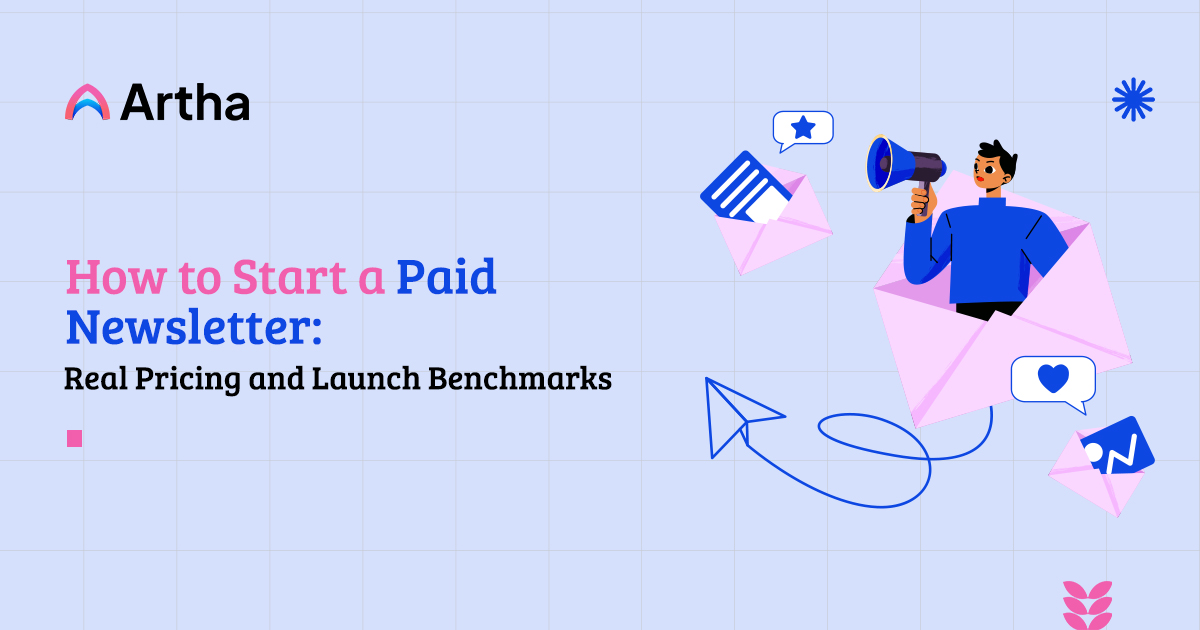
Let’s talk about the internet’s current favorite side hustle glow up: turning your newsletter into an actual income stream. It’s time to stop giving away all your best intellectual property for free and finally learn how to start a paid newsletter.
If you scroll through traditional creator guides, they will tell you to slap a paywall on your third issue, set a $10 monthly fee, and start picking out colors for your future beach house. Then you launch, total silence hits your inbox, and you end up wondering where the math went wrong.
Learning how to start a subscription newsletter is not just about toggling a button on your dashboard. It is an exercise in timing, audience trust, and brutal conversion realities. Putting up a paywall too early can slow your growth down, while doing it too late leaves massive money on the table.
Let’s unpack the exact framework to launch a paid newsletter, price it correctly based on real market data, and make money even before your audience hits mega-influencer status.
Before we talk about paid newsletter pricing, we need to address the elephant in the room: when should you actually launch a paid tier?
Most platforms encourage creators to charge from day one. But across the publishing ecosystem, the median free-to-paid conversion rate sits around 1.5% to 3%.
Do the quick math on that:
Putting all your monetization energy into recurring subscriptions works best once your free list reaches around 5,000 engaged subscribers (which gives you 100+ paid members and a baseline of $800 to $1,000/month).
If you are below that threshold, forcing a paywall can stunt your organic reach because locked posts cannot be shared on social media or forwarded to friends.
Once you’ve got the engaged audience (or you’re strategically building toward it), here’s how to start a paid newsletter the right way:
If you want the bigger picture on turning any newsletter into a full income stream, not just the paid subscription piece, our pillar guide on how to monetize a newsletter covers the whole playbook, this post is really the deep dive on just one piece of it.
When figuring out how much to charge for a paid newsletter, creators usually fall into two traps: pricing too low out of self-doubt ($3/month), or pricing way too high without justifying the unique value ($50/month).
To set your baseline, align your cost with your niche and your target reader’s pocketbook.
This table breaks down typical pricing tiers, target conversion rates, and primary monetization strategies across different list sizes.
| Newsletter Type | Typical Monthly Price | Typical Annual Price | Best Fit For |
| Niche industry insights (finance, tech, marketing) | $8 to $15 | $80 to $150 | Creators with specialized expertise and a professional audience |
| Personal essay / lifestyle | $5 to $10 | $50 to $100 | Writers with a strong personal brand and loyal readership |
| Community-driven (with private group access) | $10 to $25 | $100 to $250 | Creators offering networking or peer support alongside content |
| Data-heavy / research reports | $15 to $50 | $150 to $500 | B2B or investor-focused newsletters with high-value insights |
| Creative (fiction, art, exclusive drops) | $4 to $8 | $40 to $80 | Creators with a passionate fanbase wanting behind-the-scenes access |
A good rule of thumb when you’re figuring out paid newsletter pricing is to price slightly below what feels “safe” for your first ninety days, then raise it once you’ve got testimonials and retention data to back a higher number. Undercharging early and adjusting up is a much easier conversation with your audience than starting high and having to justify a price they never fully bought into.
When you are ready to flip the switch and learn how to start a paid newsletter step-by-step, follow this launch playbook:
Do not just promise more emails. Readers are already drowning in inbox noise. They will not pay $10 a month just to get spammed twice as often. Instead, offer a distinct product shift:
Pick a platform that matches your long-term margins. Connect your business bank account to Stripe. Enable annual billing right out of the gate; offering a 15% to 20% discount on annual plans gives you an immediate upfront cash injection and drastically improves subscriber retention.
Do not silently turn on your paywall. Treat it like an event:
Even with the steps down, plenty of creators fumble the execution. A few patterns to dodge when you start a subscription newsletter:
Learning how to start a paid newsletter isn’t about slapping a random paywall on your third issue and crossing your fingers. It’s about knowing your numbers, respecting your audience’s inbox, and launching your paid tier when your list actually has the critical mass to make it worth your time.
If your list is under 5,000 readers, don’t sweat it; keep building trust, drop value-packed career resources or micro-sponsorships into your free sends, and let your core community bake. Once you have that solid baseline of engaged fans, turn on your subscription tier, set a fair price, and go secure your recurring revenue.
There’s no hard rule, but most successful paywalls start converting meaningfully once a newsletter has around 5,000 engaged subscribers. Below that, sponsorships and alternative revenue streams usually make more sense.
Hybrid wins for most creators. It keeps your top of funnel healthy while still monetizing your most invested readers, and it gives new subscribers a taste before asking for their card.
It depends on your priorities around fees, design flexibility, and built-in discovery. Substack, Beehiiv, and Ghost each have different strengths; we cover the full comparison in our best paid newsletter platforms breakdown.
Sponsorships, affiliate placements, and platforms like artha.link that let you monetize your existing audience through relevant job listings are all solid ways to earn before your list is big enough to sustain a paywall.
Yes, and you probably should. Most creators start slightly lower to build initial traction, then raise prices once retention and testimonials give them the confidence (and the receipts) to charge more.