



Okay so here's a fun fact that ruins everyone's day the first time they hear it.



If you’re running a blog that genuinely helps people, by explaining concepts, breaking down tools, or sharing informed insights there’s a strong chance you’re sitting on an income stream you haven’t fully tapped yet.
That income stream is a sponsored posts blog.
In the US market, brands are steadily moving budgets away from traditional banner ads and toward creators who can educate, influence, and build trust through long-form content. A well-positioned sponsored posts blog doesn’t just generate one-off payments; it creates repeatable, predictable revenue by turning your blog into a brand asset.
However, sponsored posts only work when they’re done right.
A sponsored posts blog isn’t about publishing random promotions or sacrificing credibility for quick money. It’s about working with relevant brands, creating content that still delivers value to your audience, and getting paid fairly for the reach and trust you’ve already built.
This guide will walk you through how to build and monetize a sponsored posts blog the smart way, from preparing your blog for sponsorships to pitching brands, pricing your content, and protecting your SEO.
If you’re ready to turn your blog into a sustainable revenue channel, this is where it starts.
A sponsored posts blog is a blog that earns revenue by publishing paid content for brands—while still providing genuine value to readers.
At its best, a sponsored posts blog feels no different from your regular content. The only difference? A brand is paying for visibility inside a piece of content that already aligns with what your audience cares about.
At its worst, it looks like a random sales pitch that nobody asked for.
The difference comes down to strategy.
A sponsored posts blog:
Brands aren’t paying just for a mention. They’re paying for:
That’s why blogs that explain, review, compare, or guide tend to perform best as a sponsored posts blog.
Let’s clear up a few misconceptions.
A sponsored posts blog is not:
When creators treat sponsored posts like quick wins, readers notice, and brands stop coming back.
This is why so many creators are shifting toward a sponsored posts blog model:
For value-driven blogs, sponsored posts often become the most reliable and scalable revenue stream, especially when paired with strong SEO and evergreen content.
A well-run sponsored posts blog doesn’t disrupt your content. It strengthens it.
And once you understand what sponsored posts really are, the next step is knowing whether your blog is ready to attract them.
One of the biggest myths around a sponsored posts blog is that you need massive traffic to get paid. You do not.
In the US market, brands care far more about relevance and trust than raw pageviews. A smaller blog with the right audience often earns more than a large blog with unfocused traffic.
If your blog attracts readers who come to learn, decide, or solve a problem, you are already in a strong position to monetize through a sponsored posts blog.
Brands typically evaluate a sponsored posts blog on a few key factors:
A sponsored posts blog works especially well for blogs that publish:
These blogs help readers take action, which is exactly what brands are paying for.
There is no official number.
Many sponsored posts blogs start monetizing with a few thousand monthly readers if the audience is targeted and the content is strong. For knowledge driven blogs, depth often matters more than scale.
If your blog provides real value and attracts the right readers, brands will see it as an opportunity not a risk. Once you know your blog can attract sponsors, the next step is understanding why brands are willing to pay in the first place.
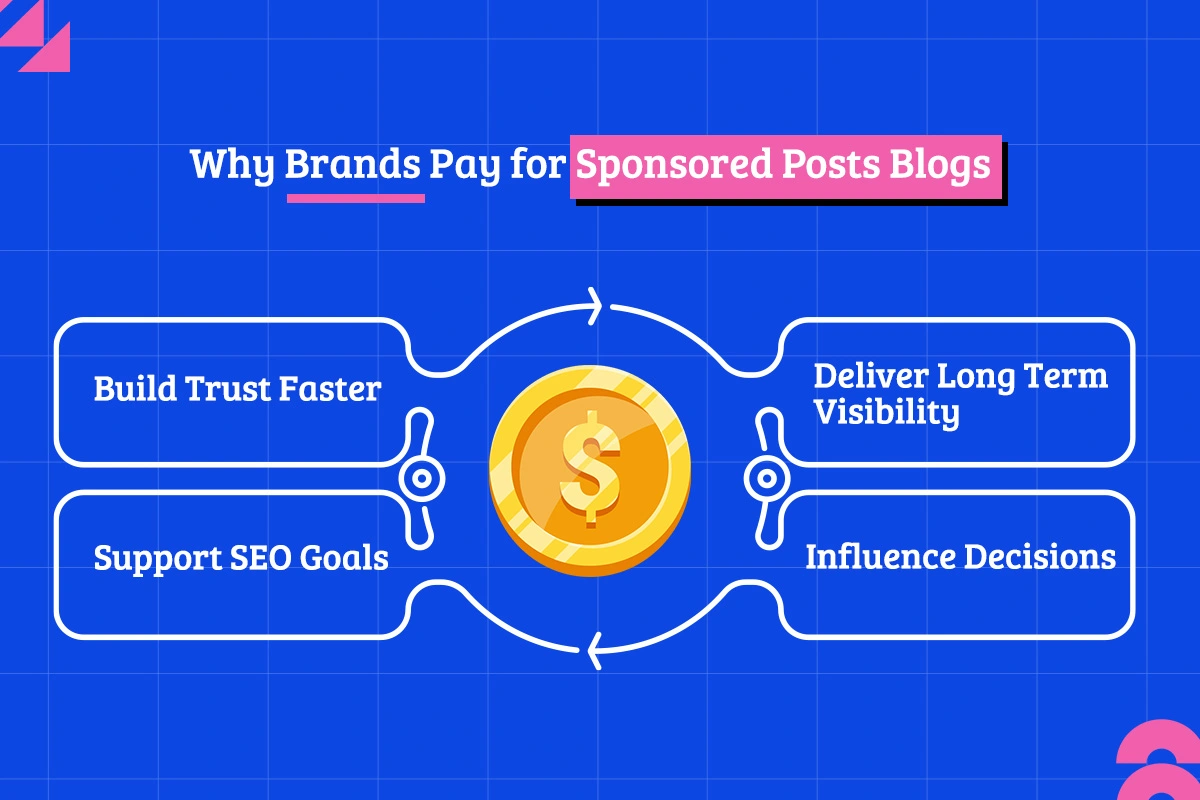
Content for above image
Brands do not invest in a sponsored posts blog just to get a mention. They pay because sponsored blog content delivers value that most ads simply cannot. Sponsored posts blogs sit at the intersection of trust, content, and search visibility.
Readers trust blogs more than traditional ads. When a product or service appears inside a well written article, it feels like a recommendation, not a promotion. That trust transfers from the creator to the brand, which is why companies are willing to pay premium rates for placement in a sponsored posts blog.
Unlike social media posts that disappear in hours, a sponsored blog post can rank on search engines for months or even years.
For brands, this means:
This is one of the biggest reasons sponsored posts blogs outperform short lived campaigns.
Many brands use a sponsored posts blog to support their search strategy. Quality content on relevant blogs helps with brand discovery, referral traffic, and authority building. That SEO value is built over time, which makes sponsored posts blogs far more attractive than one time ads.
Blogs help readers research and compare before making decisions. Brands want to be part of that moment. A sponsored posts blog places a brand inside the decision making process, not after it. That combination of trust, longevity, and influence is exactly why brands continue to invest in sponsored posts blogs year after year.
Before brands agree to work with you, they quickly check whether your blog looks ready for collaboration. A sponsored posts blog needs to feel intentional, not improvised.
Preparation makes the difference between being ignored and being taken seriously.
Brands should understand your blog within seconds. Your content focus, audience, and value should be obvious from the homepage.
A sponsored posts blog works best when:
Create the Right Pages A few basic pages signal professionalism:
You do not need anything fancy. You need clarity and intent.
A sponsored posts blog performs better when expectations are clear. Let brands know:
This saves time and protects your content quality.
Simple improvements go a long way:
Brands want their message placed in an environment that reflects quality. Once your blog is prepared, the next step is finding sponsored post opportunities and starting conversations with brands.
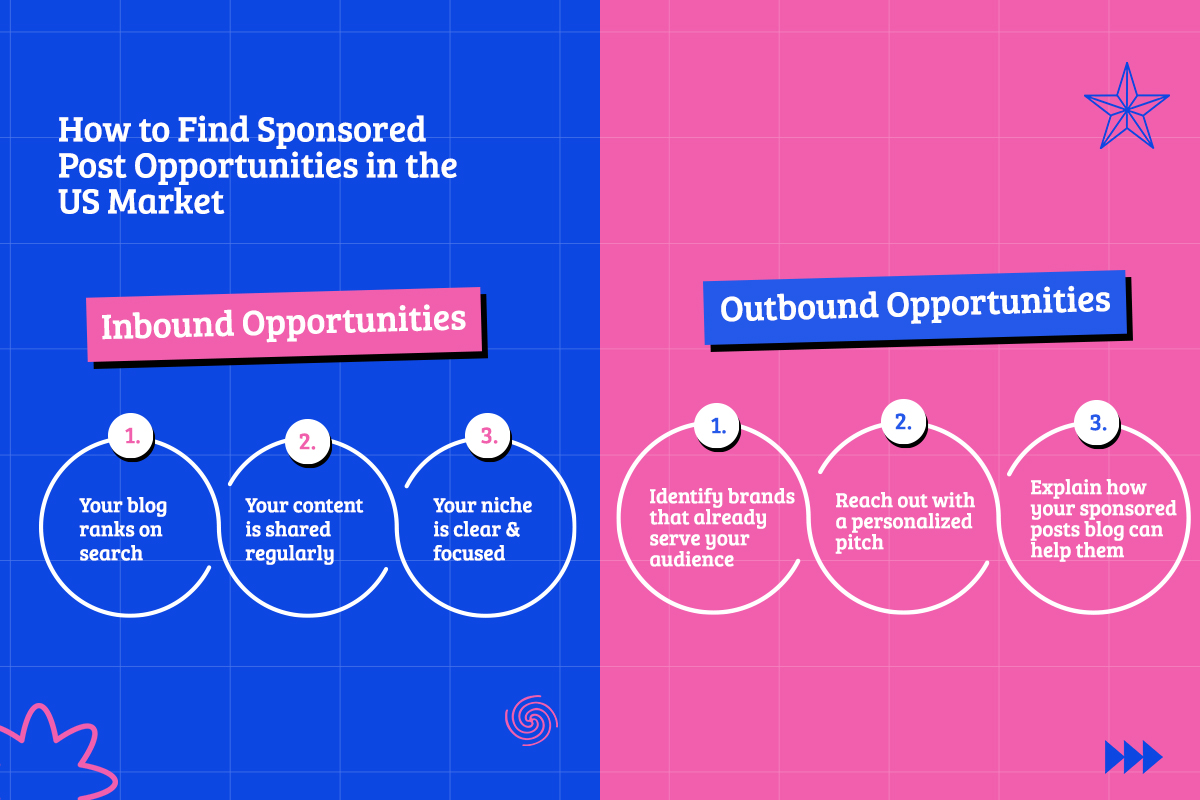
Content for the above
Inbound Opportunities
Outbound Outreach
Once your blog is ready, the next question is simple. Where do sponsored posts actually come from?
A sponsored posts blog grows through two main paths. Inbound interest and outbound outreach. The most successful blogs use both.
Inbound opportunities happen when brands reach out to you.
This usually occurs when:
To increase inbound requests, make it obvious that your site accepts sponsored posts. A short mention on your Work With Me page is often enough.
Outbound outreach gives you control and faster results.
With outbound outreach, you:
This approach works especially well in the US market, where brands expect direct and professional communication.
Some creators use platforms that connect brands with blogs offering sponsored posts. These can be helpful early on, but they often pay less and limit control.
Many experienced creators treat platforms as a starting point, then move to direct partnerships as their sponsored posts blog grows.
The best sponsored posts blog does not work with everyone. It works with the right brands.
A smaller number of relevant partnerships will earn more and protect trust far better than frequent low quality deals. Once opportunities start coming in, the next challenge is knowing how to pitch and price your sponsored posts confidently.
Once your sponsored posts blog is ready, pitching brands becomes a numbers and relevance game, not a guessing game. Brands want to know three things quickly. Who your audience is, why your blog is relevant, and what outcome they can expect.
A strong pitch for a sponsored posts blog should:
Avoid long explanations. Brands prefer clarity over storytelling in outreach.
Pricing for a sponsored posts blog depends on value, not just traffic.
In the US market, sponsored post pricing commonly ranges from:
If your blog influences decisions or ranks well on search, you can charge confidently. Underpricing signals low value and attracts the wrong brands.
The success of a sponsored posts blog depends on how well sponsored content blends with your regular content.
Sponsored posts should educate first and promote second. When content feels helpful, readers stay engaged and brands see better results.
To protect trust:
Transparency matters. Always disclose sponsorships clearly. This protects both credibility and compliance. From an SEO perspective, relevance is key. Sponsored posts should align closely with your existing topics. Search engines reward consistency and punish randomness. A sponsored posts blog grows when readers do not feel interrupted by promotions.
Even strong blogs struggle when avoidable mistakes repeat.
The most common issues include:
A sponsored posts blog performs best when quality stays higher than quantity.
A sponsored posts blog is a strong monetization channel, but it should not be your only one.
Brand deals fluctuate. Budgets pause. Campaigns end. Even the best sponsored posts blog can have uneven income months. That is why smart creators build multiple revenue streams around the influence they already have.
If your blog helps people make career decisions, learn skills, or explore opportunities, there is a good chance you are already influencing job choices without realizing it.
That influence has value.
artha.link helps creators earn from the same career influence they already have.
You do not need to create new content.
You do not need to pitch brands.
You do not need to wait for hires to happen.
It’s YOUR custom link loaded with thousands of jobs, the exact ones your audience is looking for. They apply. You earn.
Click here to learn more.