

You finally hit consistent brand deal money. Maybe AdSense started paying out like a real paycheck, or your affiliate links…

You’ve built an audience that trusts you. They binge your videos. They save your posts. They DM you asking which tool to buy, which framework to learn, which company to apply to next.


You’ve built an audience that trusts you. They binge your videos. They save your posts. They DM you asking which tool to buy, which framework to learn, which company to apply to next.
That last one is the key.
Every week, thousands of creators in tech, finance, marketing, and design accidentally become career advisors for free. Their audience is job-hunting. Actively. Urgently. And they’re looking to people they already trust to point them in the right direction.
Here’s what most creators don’t realize: that trust is a monetizable asset. Not through a course, not through a sponsorship, not through a merch drop, but through something far simpler. Sharing job opportunities that are genuinely useful to your audience.
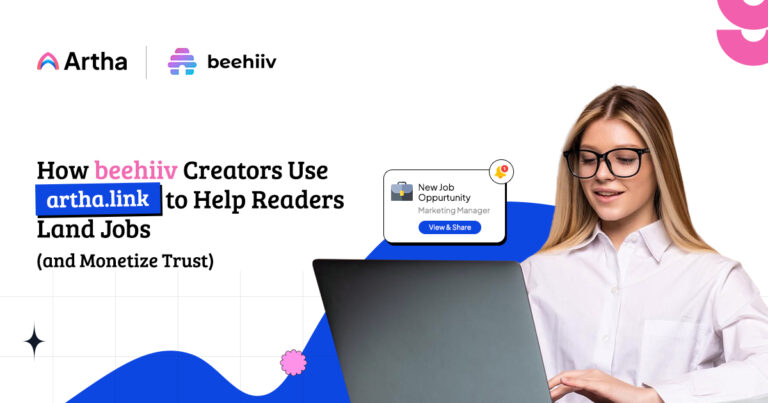
This is what creator-led hiring looks like in practice. And when you set it up right, through a tool like artha.link, it works while you sleep because your audience keeps clicking, applying, and earning you money on their way to their next role.
But here’s where creators stall: they don’t understand what actually pays them.
What triggers a payment? What’s a “qualified click”? What’s the difference between someone clicking a job listing and someone actually aapplying, andwhy does that distinction determine how much you earn?
This guide answers all of that, plainly, and shows you exactly how to build the kind of job-sharing presence that turns audience trust into consistent income.
Most creators think of themselves as educators, entertainers, or community builders. That’s accurate. But your audience has a goal beyond consuming your content; they want to level up their life. For a huge portion of your followers, that means finding a better job.
When you share a job opportunity, you’re not interrupting your content. You’re extending it. You’re saying, “I know what you’re working toward, and here’s a door that might take you there.”
That’s creator-led hiring. You’re not a recruiter. You’re a trusted middleman between great talent (your audience) and the companies that desperately need them. The value you provide isn’t the job listing; it’s your credibility. Your audience clicks because they trust you, not because they found a job board.
The result? Your audience gets relevant opportunities curated for their niche. Companies get high-intent applicants. And you get paid for every qualified action your audience takes.
This is where most creators get fuzzy and where understanding the model separates casual link-posters from creators who build a real recurring income stream.
The short version: You don’t get paid just for slapping a link in your bio. You get paid when your audience takes specific, verified actions that signal genuine intent to employers.
Here’s how the payment chain actually works:
When someone from your audience clicks on a job listing through your artha.link profile, that click is tracked. But not all clicks are equal.
A raw click is just traffic. Someone tapped the link, the page loaded, and they bounced in 8 seconds. That doesn’t pay you.
A qualified click is different. It’s a click where the user spends meaningful time engaging with the listing, reading the job description, checking the company, and showing behavioral signals that they’re a real candidate, not a bot or an accidental tap.
artha.link filters for qualified clicks automatically. This matters because it’s what protects the integrity of the platform for employers, and it’s what makes your earnings legitimate and sustainable.
You don’t need to manage any of this. The platform does it. What you control is the quality of the traffic you send, which is why niche, engaged audiences always outperform large, broad ones.
When a qualified visitor moves beyond reading and actually submits an application, that’s when your earnings jump.
This is the “click and apply” distinction, and it’s the most important thing to understand about your earnings potential.
| Action | What It Means | Earnings Impact |
| Raw click | The visitor landed on the listing | No payment |
| Qualified click | Verified engagement with the listing | Base payment triggered |
| Application submitted | The visitor applied for the role | Higher CPA payment triggered |
Most creator monetization models pay you once per click, per view, and per sale. Creator-led hiring on artha.link pays you at multiple points in the funnel because employers value both the traffic signal (someone showed up) and the intent signal (someone applied). The deeper your audience goes, the more you earn per person.
An ad impression pays fractions of a cent. A qualified application from your audience to a tech or SaaS role can pay significantly more because you’ve essentially pre-qualified a candidate for a company that would otherwise spend thousands in recruiting costs.
Your audience’s trust converts into their action. Their action converts into your earnings.
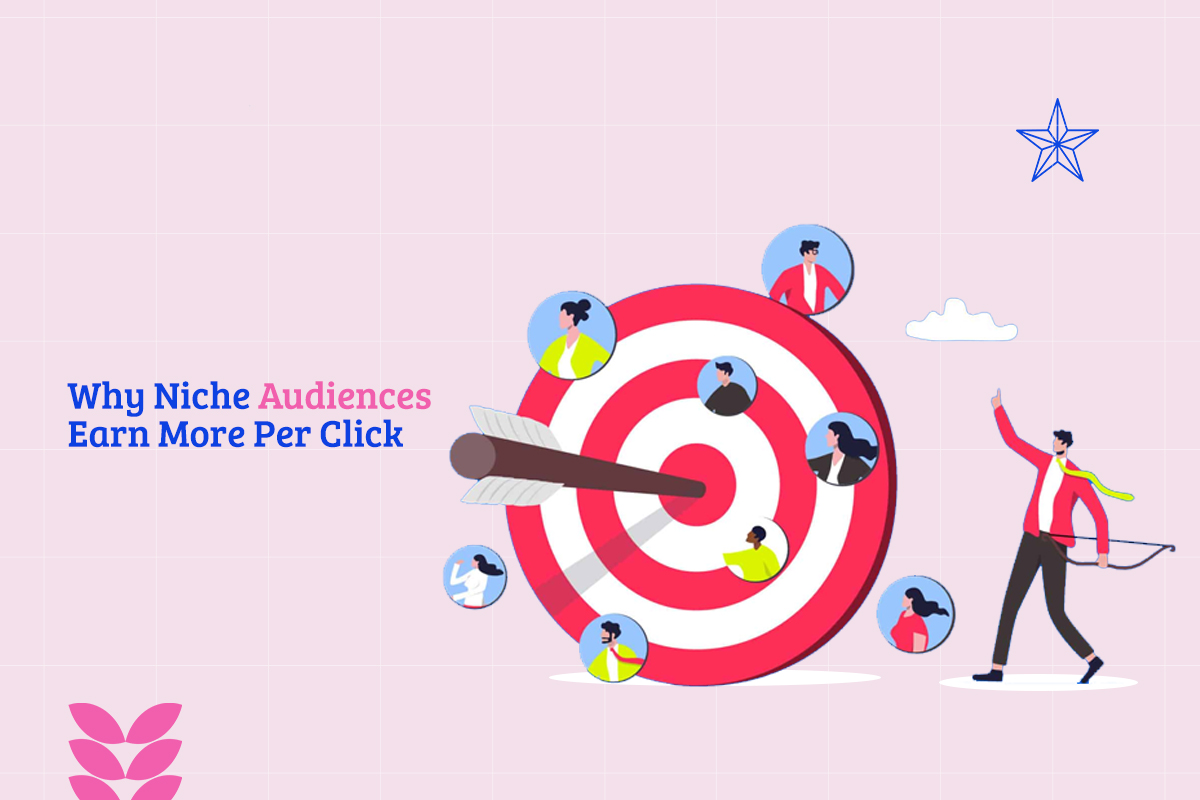
This is the insight that reframes everything.
It’s not about followers. It’s about relevance matching.
When a developer who watches your React tutorials clicks on a frontend engineering role through your artha.link, that’s a high-relevance match. The visitor is qualified by default; they already know the tech stack, they’re in the right career stage, and they’re actively engaged in the space. That application is worth more to the employer than an anonymous application from a generic job board.
You, as the creator who connected them, get credit for that match quality.
A creator with 4,000 highly engaged followers in the DevOps niche will often out-earn a creator with 40,000 general tech followers because every click they send carries implicit context. The employer isn’t just getting a click. They’re getting a candidate from a trusted community, pre-filtered by the creator’s content itself.
This is the compounding advantage of a niche audience: the tighter your content, the more valuable each click becomes.
Even creators with the right setup leave money on the table because of these three mistakes:
“Link in bio” is a graveyard. If your audience doesn’t know what the link does, they won’t click it. Worse, if they click out of curiosity and bounce immediately, you’ve wasted a potential qualified visitor.
Fix it: Mention the link in context. In a video about switching careers in tech? Say, “I’ve put together a board of the best roles in this space right now; check the link.” In a post about a trending framework? “If you’re working in this stack and open to something new, my job board has listings updated daily.” Context converts.
If your content is about AI engineering but your keywords are just “technology jobs,” your board will fill with irrelevant listings that your audience won’t click. Worse, the clicks you do get will be low-intent because the listings don’t match what your audience is looking for.
Fix it: Use role-specific keywords that mirror your content’s vocabulary. “Machine learning engineer,” “LLM ops,” “AI research scientist,” not just “tech.”
Your job board earns when people visit it. That requires consistent, repeated promotion, not a one-time share. The creators who build a steady income from artha.link treat it like a recurring segment of their content, not a one-off mention.
Fix it: Build a rhythm. Every video where careers come up. Every week on LinkedIn. Every time someone DMs you asking for job advice. The link should feel like a natural, standing resource because it is one.
Your artha.link dashboard shows you three core metrics:
The ratio that matters most is qualified clicks to applications. A high conversion rate here means your audience is landing on listings that genuinely match them, which means your keywords and content alignment are working. A low rate means there’s a mismatch: either your board isn’t relevant enough to your audience, or your audience’s intent isn’t strong when they arrive.
For tech and SaaS creators specifically, CPA values trend higher than general job categories. A single qualified application from a senior engineering role will outperform dozens of clicks from a lower-intent vertical. This is why, if you’re in a premium niche, you don’t need huge volume, you need quality traffic and relevant listings.
The creators who earn consistently from artha.link aren’t doing anything complicated. They’ve built a simple, repeatable system:
Traditional job boards are anonymous. A candidate submits a resume into a void. There’s no trust, no context, no pre-qualification.
Creator-led hiring flips this. Your audience shows up to a job board already filtered, they’re in your niche, they trust your judgment, and they’re taking action because you recommended it. That’s not a small thing. That’s the foundation of a monetization model that scales with your credibility, not your follower count.
The job market will always exist. Companies will always hire. Your audience will always need to find work. What’s new is that you can sit at the centre of that relationship, not as a recruiter, not as a job board, but as the trusted creator who connected the right people at the right time.
artha.link makes the infrastructure invisible so you can focus on the only thing that actually matters: making content your audience trusts.
Set up your artha.link → [artha.link]
Most creators see their first qualified clicks within the first day of actively sharing the link in content. Earnings follow quickly after the timeline, depending on how frequently you share and how relevant your board is to your audience’s active job search intent.
Yes and this is an underrated lever. An audience of early-career professionals in a hot hiring market generates more applications (and therefore more earnings) per click than a senior audience that’s more passive about switching. That said, senior-role applications generate higher CPA values. Both are viable; the optimization differs.
Absolutely. You retain total control over your brand alignment. Through your dashboard settings, you can filter listings by location, remote-only status, salary thresholds, or specific job titles, ensuring every listing matches your audience’s exact expectations.
Your dashboard gives you granular visibility into clicks and applications per listing, so you can identify which types of roles your audience engages with most. Use this to refine your keyword settings over time.
The platform utilizes secure, enterprise-grade tracking tokens built into the job feed routing system. When a user transitions from your board to an external corporate application page, the tracking system monitors the lifecycle of that specific session. Once the applicant clicks the final “Submit Application” button on the employer’s site, the backend securely logs the successful conversion and instantly updates your analytics dashboard.